2020年11月30日星期一

Magnesia alumina carbon brick composition and classification

 Broadly speaking, refractories with alumina, magnesia and carbon as the main components can be collectively referred to as aluminum magnesium carbon refractory materials. Alumina magnesia carbon brick are non-fired shaped refractory products combined with high alumina bauxite clinker, magnesia and graphite as main raw materials and combined with asphalt or resin. Aluminum-magnesium-carbon refractory products can be divided into two categories according to the content of alumina or magnesia: one is alumina magnesia carbon brick with alumina as the main component, usually expressed as AMC or LMC; the other is mainly magnesium oxide. The composition of magnesia alumina carbon brick is usually expressed by MAC or MLC.


The new magnesia alumina carbon technology is ideally suited for ladle transition zone (between the AMC barrel brick and the MC slag lines), as it is compatible with both magnesia-carbon (MC) and alumina-magnesia-carbon brick qualities. There will be no transition zone joint erosion due to the incompatibility of some AMC barrel products mating up to magnesia-carbon slag lines. The new magnesia alumina carbon brick technology also performs very well in the steel ladle bottoms, barrels and especially in the lower sidewall slag zones, which do not tend to react with free lime. The new magnesia alumina carbon brick can be used successfully as slag line brick in steel ladles and steel transfer ladles, as long as there is no free lime the slag during tap, after de-skulling and extra additive addition, and during the heat treatment in the LMF.?

Article Source:Magnesia alumina carbon brick composition and classification
Company name: Henan Xinmi Changxing Refractory Materials Co.,Ltd
Email: info@cxrefractories.com
Website:http://www.cxrefractories.com


2020年11月25日星期三

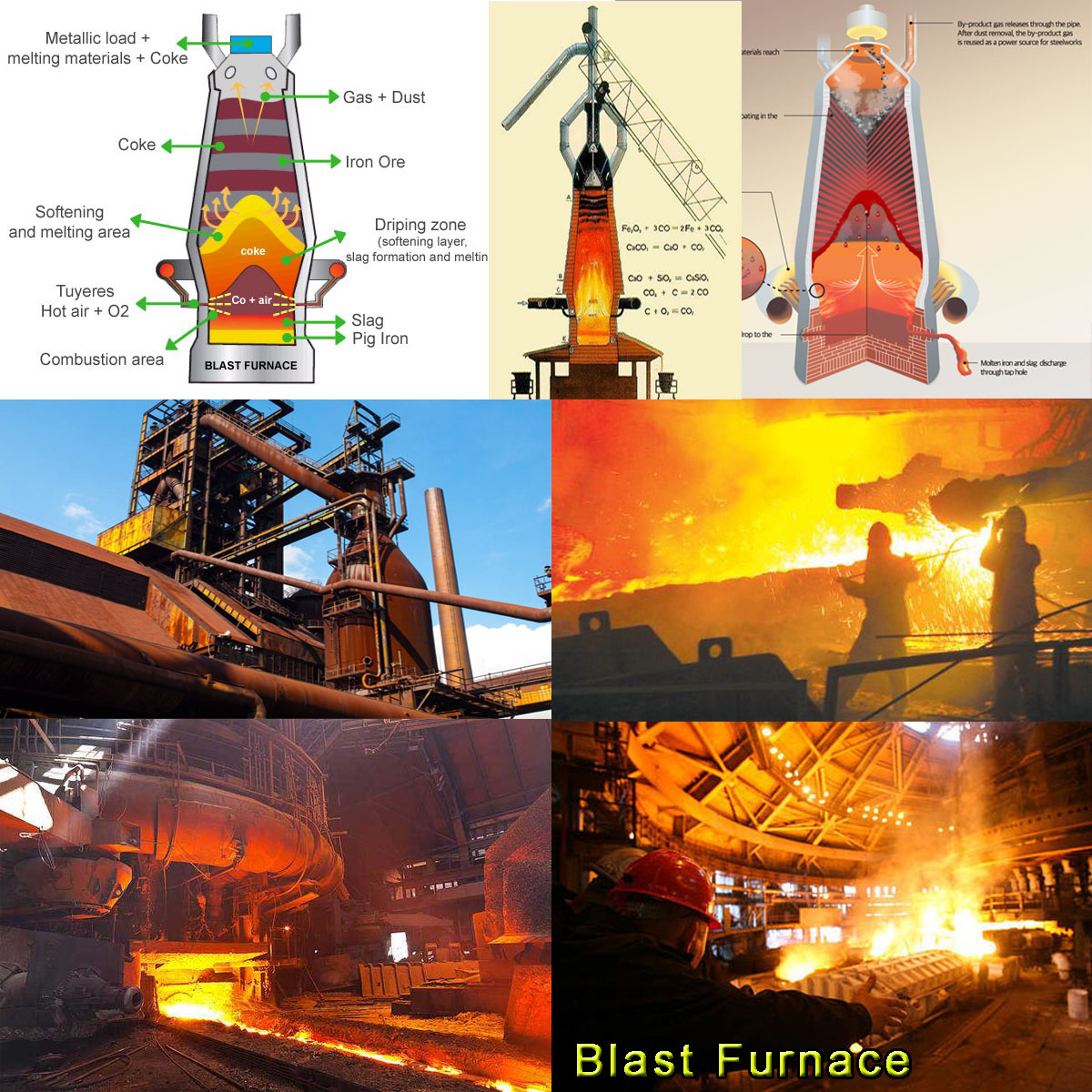
The development of refractory material for blast furnace

 Introducing the development of refractory material for the blast furnace lining in China. For the design of blast furnace, it needs to choose refractory raw material reasonably according to the performance for the size of the volume and different parts. In China, with the quality and variety of the blast furnace lining making a great progress, no need to use the imported refractory material.

With the quick development of steel-making industry in recent years, the blast furnace lining refractory material has made great progress. It is pursuing the advanced technology in the world instead of some of importing products to meet the need of the development of steel-making production.

Prolong the blast furnace service life is the important policy in recent ten years in China.

1.The blast furnace refractory material performance
2.The blast furnace lining refractory material quality analysis

Changxing refractory provides refractory products, calcium silicate products, castable & mortar, china refractory brick, ceramic fiber felt, ladle & tundish nozzle, ceramic fiber with high quality for you. Such as high alumina refractory bricksmagnesia carbon brick, clay refractory bricks and other refractory products.

Article Source: The development of refractory material for blast furnace
Company name: Henan Xinmi Changxing Refractory Materials Co.,Ltd
Email: sales1@chinafirebrick.com
Website:http://www.chinafirebrick.com


2020年11月24日星期二

Refractory bricks used for different parts of blast furnace

 Blast furnace is the main equipment for ironmaking, and clay brick is the earliest furnace lining material used in blast furnace. Blast furnace has the advantages of large output, high productivity and low cost, which is unmatched by other ironmaking methods.


The refractory materials and refractory bricks used in diffreent parts of blast furnace are as follows.

(1) Furnace hearth
One of the main functions of furnace hearth is to hold molten iron safely. The hearth refractory material must be stable enough when the temperature is highter than 1500 ℃. So for furnace hearth bottom, we need to choose carbon brick which has the advantages of anti-molten iron penetration, good melting, alkali resistance erosion, good thermal conductivity. And we can use small carbon brick to take the place of large carbon block, or construct ceramic rings on the carbon bricks.

(2)Tuyere zone and bosh
Temperature in tuyere area and furnace bosh is the highest in the blast furnace. The hot gas temperature produced in front of the tuyere rises at a high speed, the temperature can reach 1600 ℃ and higher. When 1450 ~ 1550 ℃molten iron and slag flow furnace hearth and finally flow to the furnace bosh, there will be a variety of metallurgical reactions happen in this area violently. Those two areas need refractory materials with characteristics of good resistance to high temperature and slag erosion, good alkali resistance, anti carbon dioxide and anti water oxidation. China refractory bricks we can use in this area are corundum brick, alumina carbon brick, hot pressed semi-graphite carbon brick, SiC brick and so on.

(3)Furnace bosh and lower furnace stack
The lower furnace stack is the position of root cohesive zone where the temperature is quite high, but slag layer or stable slag layer self protection can not be formed. This are need ds refractory materials which can bear severe temperature fluctuations, and also has advantages of alkali metal erosion, zinc erosion, carbon monoxide erosion, etc. What’s more, refractory materials used in furnace bosh and lower furnace stack should have good thermal shock stability, high temperature resistance, good alkali resistance and other properties. Refractory bricks can be used in these two areas are high alumina brick, corundum brick, alumina carbon brick, SiC brick and so on.

(4)The middle and upper part of furnace stack
The furnace stack middle part’s temperature is lower than that of furnace stack lower part. People genarally use high alumina brick, corundum brick and silicon carbide in furnace stack middle part. The temperature in furnace stack upper part is relatively lower than other parts, and it mainly affected by the wear and impact of the burden, alkali metal, zinc and carbon deposition erosion. This area requires refractory material has advantages of good wear resistance, good alkali resistance and good thermal shock stability.?Refractory bricks can be used in this area are clay brick, high alumina brick, sillimanite brick, corundum brick. There is a trend that cooling walls are taking the place of refractory bricks used in blast furnace.

Article Source: Refractory bricks used for different parts of blast furnace
Company name: Henan Xinmi Changxing Refractory Materials Co.,Ltd
Email: sales1@chinafirebrick.com
Website:http://www.chinafirebrick.com


Thermal conductivity of refractory bricks

 The thermal conductivity of refractory fire bricks is represented by the thermal conductivity that has the ability to transfer heat. Thermal conductivity represents the amount of heat per in unit area, unit time and unit temperature gradient in the energy transfer process.


At 1000 ℃The thermal conductivity of various refractory bricks rate as shown below. The thermal conductivity of different materials is often very different. At normal temperature, the thermal conductivity of various refractory bricks can be from a few percent to several tens (w/(m℃), which is nearly a thousand times lowst than the highest value. As the temperature rises, although the difference between the thermal conductivity of various refractory bricks tends to decrease, but the difference is still large. Such as 1000 degrees centigrade, the thermal conductivity of lightweight silica is only about 0.35W, recrystallized silicon carbide products is about 17.5W/(m℃), graphite can be up to 35W / (m℃).

In addition to temperature, the thermal conductivity of refractory bricks is closely related to its chemical composition and structure. When refractory bricks are made of crystal, the properties of crystal have obvious influence on thermal conductivity. As we all know, the thermal conductivity of inorganic nonmetallic materials is generally much lower than that of metal. Because inorganic nonmetallic materials are different from metals with metal bonds, there are very few free electrons. The thermal conductivity caused by free electrons in this material is extremely limited, and the lattice vibration is mainly deviated from the degree of resonance. The greater the degree of deviation from the resonance, the thermal conductivity is smaller. The degree of lattice vibration deviation increases with the difference in the molar mass of the constituent components, so the thermal conductivity of the element is the largest. (So the thermal conductivity of graphite is relatively large).

China refractory bricks have a complex structure of crystals, the thermal radiation of the lattice is greater and the thermal conductivity is smaller, such as MgO, A12O3 and MgAl2O4 Such as MgO, A12O3 and MgAl2O4 are equiaxed, but the structure of MgAl2O4 is complex and the thermal conductivity is low. Non-coherent crystals, in the direction of dense particles along the crystal, thermal conductivity is larger. The quartz along the C axis has a dense accumulation of particles, and its thermal conductivity (13.6W/(m℃)) is about twice as high as that of the C axis. The layered structure of graphite, the thermal conductivity parallel to the direction of the level of about 4 times in the direction perpendicular to plane direction.

If the crystal is defective, the formation of substitutional solid solution, because the rules of the crystal structure of the destruction caused by thermal scattering phenomenon, resulting in a decrease in thermal conductivity. Other crystal defects such as vacancies, dislocations and so on, also has a similar effect. Due to the thermal scattering of the grain boundary, the thermal conductivity of the polycrystalline material is lower than that of the single crystal. The refractory raw material of fine grain is lower than that of coarse grain. The material contains impurities, the thermal conductivity is lowered due to the scattering effect.

When refractory bricks contain glass phase, due to the amorphous structure of the disorder, the probability of collision between atoms. So compared with the crystal, thermal conductivity is low. When the refractory brick contains pores, because the thermal conductivity of the gas is smaller than the solid, so with the increase in porosity, the thermal conductivity of the material decreases. This is the basic reason for the low thermal conductivity of porous materials.

Article Source: Thermal conductivity of refractory bricks
Company name: Henan Xinmi Changxing Refractory Materials Co.,Ltd
Email: sales1@chinafirebrick.com
Website:http://www.cxrefractories.com

Thermal Conductivity

1-Silicon Carbide Brick;2-Magnesia Brick

3-Silicon Carbide Brick(SiC70%);4-Corundum Brick

5-Silicon Carbide Brick(SiC50%);6-Sintered Dolomite Brick

7-Zirconia Brick;8-Chrome-Magnesite Brick

9-Corundum(A12O390%);10-Sillimanite Brick

11-Olive Brick;12-Chromite Brick

13-Silica Bricks;14-Dense Clay Bricks

15-Clay Brick


The uses of high purity magnesia

 Because the high purity magnesia has good hot modulus of rupture, slag resistance and corrosion resistance, it can increase the service life of the lining, so it is widely used in lining refractory of the steel furnace; It is a high-quality material for manufacturing refractory bricks and unshaped refractories (high-grade alkaline refractories); It can be used as a filler to make thermocouples insulation materials (household appliances, etc); It also can be used for ceramic raw materials and sintering aids, as well as metallurgy, building materials, chemicals, national defense, medical equipment,etc.


We Changxing Refractory Material Co.,LTD is professional manufacturer and supplier of refractory materials for more than 30 years. Our high quality refractory products are good sold to many countries say South Africa, Bangladesh, Indonesia, Malaysia, etc. Shall any interests, welcome to contact us. Our team would make best to be your reliable partner!

Article Source:The uses of high purity magnesia
Company name: Henan Xinmi Changxing Refractory Materials Co.,Ltd
Email: info@cxrefractories.com
Website:http://www.cxrefractories.com


2020年11月23日星期一

The advantages of high-durability cement-free iron trench materials

 Cement bonded castable for iron runner is widely used in Japanese blast furnace iron runner because of its easy construction and compact structure. However, castables with dense structure are prone to burst during baking, so the development of silica sol-bonded iron groove materials which are easy to dry and resistant to burst has been widely studied. Researchers from Shinagawa Refractory Co., Ltd., Japan, have developed a highly durable cement-free iron trench material, the composition of which is shown in Table 1. The new type of iron trench material uses silica sol as binder, keeps the Al2O3 content unchanged, increases the content of additive X by 10 times, slightly increases the amount of SiO2 and SiC+Si, and correspondingly reduces the amount of other components.


The results show that, compared with cement-bonded iron trench materials, after burning at 1000℃ for 3 h, the weight loss rate and apparent porosity of silica sol-bonded iron trench materials are greatly reduced, and the bulk density is constant the flexural strength, compressive strength and elastic modulus at temperature increased significantly, and the flexural strength at high temperature increased significantly at 1 500℃ in N2 atmosphere. The practical application results in the taphole of blast furnace show that the erosion rate of silica sol bonded iron groove material is reduced to about half of that of cement bonded iron groove material, and the service life is greatly improved.

We Changxing Refractory Material Co.,LTD is professional manufacturer and supplier of refractory materials for more than 30 years. Our high quality refractory products are good sold to many countries say South Africa, Bangladesh, Indonesia, Malaysia, etc. Shall any interests, welcome to contact us. Our team would make best to be your reliable partner!

Article Source:The advantages of high-durability cement-free iron trench materials
Company name: Henan Xinmi Changxing Refractory Materials Co.,Ltd
Email: info@cxrefractories.com
Website:http://www.cxrefractories.com


2020年11月16日星期一

The magnesia carbon bricks specification

Magnesia carbon brick is a basic refractory made of magnesia and carbon material with asphalt or resin as binder. Magnesia refractory high refractoriness and carbon refractories are difficult to be slag, steel liquid wetting multiple advantages, because of its high refractoriness, slag erosion resistance is strong, excellent thermal shock resistance, and many other good characteristics and is widely used in steel industry, such as front of converter, electric furnace slag line parts and high temperature in the working layer of ladle, severe mechanical erosion, slag erosion condition of bad environment.

The magnesia carbon brick is easy to oxidize in high temperature and oxidizing atmosphere, which leads to the deterioration and looseness of brick structure, and finally erosion, spalling and failure. Therefore, it is necessary to add various anti-oxidants to inhibit the oxidation of carbon and improve the quality of magnesium carbon brick, such as adding boron carbide, metal aluminum powder, metal silicon powder and their mixtures.

Adding aluminium and silicon into magnesia carbon brick can increase the ability of resisting oxidation notably also, the strength at high temperature and the strength at normal atmospheric temperature with carbonization dealt at 1000℃ all have obvious increasement compared with the strenth of original brick. Now many countries are developing the production technique of magnesia-carbon brick.

Article Source:The magnesia carbon bricks specification
Company name: Henan Xinmi Changxing Refractory Materials Co.,Ltd
Email: info@cxrefractories.com
Website:http://www.cxrefractories.com